Toni Morrison: An Ohio Story Too Many of Us Don’t Know
By Rebecca Asmo, Executive Director of Ohio Humanities
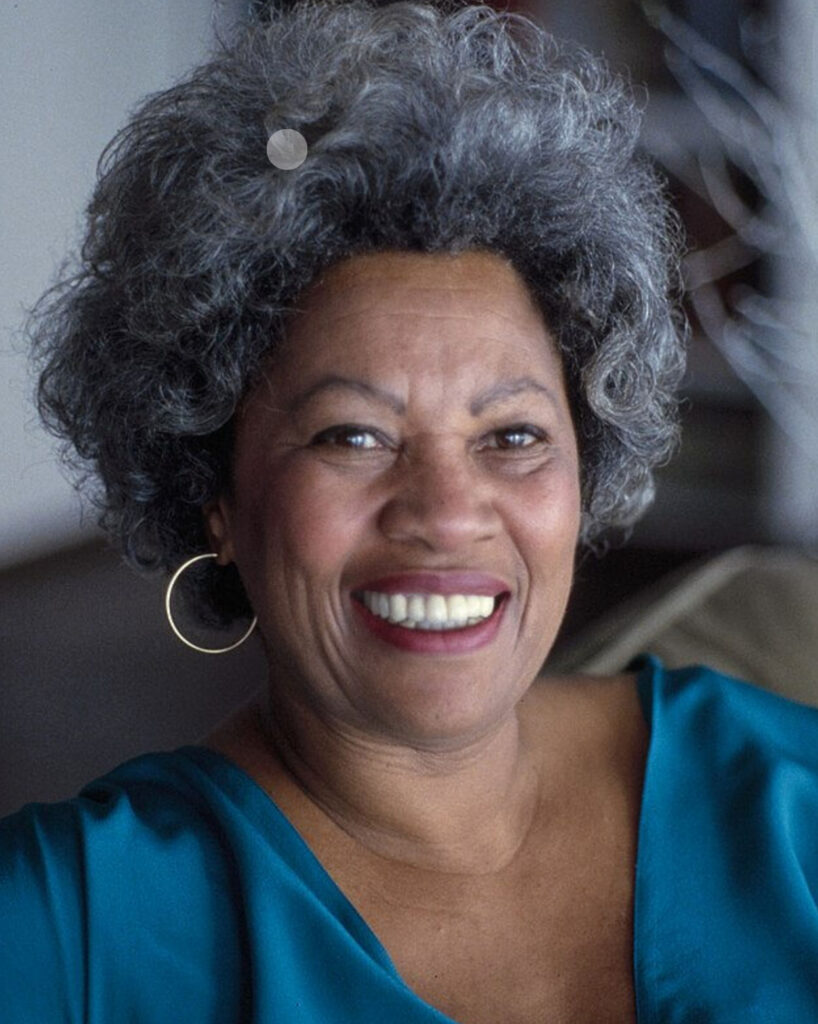
Many Ohioans can name the astronauts, athletes, and presidents that hail from the Buckeye State, but far fewer can name Toni Morrison. Why is that?
A few years ago, at one of my son’s basketball games, I was reading a copy of Morrison’s Beloved—arguably her most renowned work. A woman sitting next to me asked what I was reading, and when I showed her the cover, she said, “Toni Morrison…I’ve never heard of him.”
The comment caught me off guard—not just because Morrison is a woman, but because of what it revealed about how far her legacy has yet to travel. In that moment, I realized just how far Morrison’s legacy has yet to travel—even here in Ohio.
When I share this anecdote with fellow lovers of literature, many are surprised, but as someone who did not grow up in Ohio, I did not grow up with an awareness of Toni Morrison and only became familiar with her work as an adult. Her books weren’t part of my school curriculum—even at a girls school that leaned heavily on female authors—and they weren’t discussed at home. So, at some point in my life, I might have responded that I didn’t know who Toni Morrison was.
As my horizons broadened and my taste in books matured, my awareness of Morrison and her novels grew. I don’t have a memory of my first encounter with her work; rather, my realization of her role in the American literary canon happened more through osmosis than a single thunderstruck moment.
Since that experience in the bleachers of a musty middle school basketball gym, I have wondered how one of the most important writers in American history remains relatively unknown, even in her home state. Toni Morrison is not just a literary giant—she is an Ohio story that deserves broader recognition as an American historical figure, and America 250 provides an opportunity to amplify her story and build a sense of pride in the many ways our state influenced her creative greatness.
On the Lip of Lake Erie
“In my work, no matter where it's set... the imaginative process always starts right here on the lip of Lake Erie.”
— Toni Morrison
Chloe Ardelia Wofford was born on February 18, 1931, in Lorain, Ohio to George Wofford and Ramah Willis Wofford. Both Lorain and Morrison’s family were shaped by the industry, migration, and racial and socioeconomic conditions of early- to mid-20th century America. Morrison’s parents were hardworking and proud, instilling in her both a work ethic that would foster her development into one of America’s most original and prolific writers, and a pride in her identity as a Black American.
Lorain and its people are felt throughout each of Morrison’s novels, not just in the three that are set in Ohio—The Bluest Eye, Sula, and Beloved. The attention to community, memory, and identity in her work was drawn from formative experiences in childhood, ranging from housing and employment discrimination faced by her parents, to the encouragement she received from teachers and librarians to write (today, the public library in Lorain features the “Toni Morrison Reading Room”), and the natural and manmade beauty of Lake Erie and the Lorain Lighthouse. These experiences come together to form narrative constellations that leave readers breathless, confounded, and returning time and again, only to make new discoveries.

From Ohio to the World
Morrison left Ohio to attend Howard University, where she received a B.A. in English with a minor in Classics in 1953. In 1955, she earned a master’s degree in American Literature from Cornell University, where she studied the work of Virginia Woolf and William Faulkner. After teaching at Texas Southern University and returning to Howard, she married Jamaican architect Harold Morrison, with whom she had two sons before their divorce in 1964.
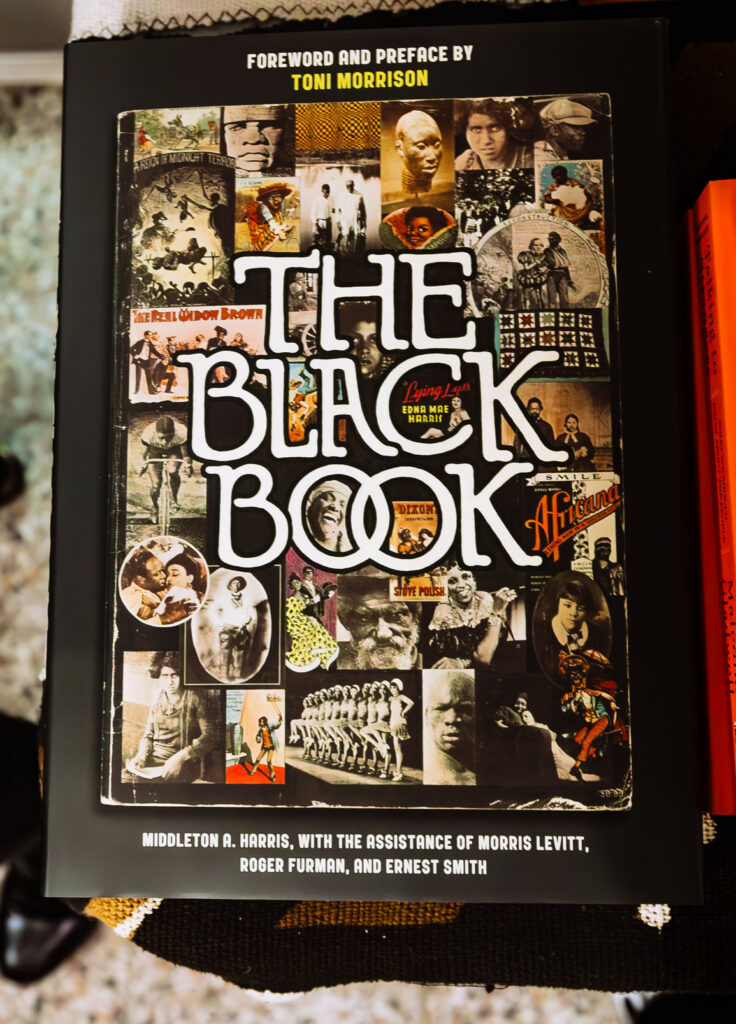
Now a single mother, Morrison moved to Syracuse in 1965 to work as a textbook editor before being transferred to New York City, where she became Random House’s first Black female senior editor in fiction. There, she fostered a new generation of Black American writers, editing works by figures such as Toni Cade Bambara, Angela Davis, and Muhammad Ali. She also helped produce important collections documenting Black life and global literature.
Later in her career, Morrison noted that African writers helped her understand what literature could look like when the White gaze was removed—an idea that would become a defining tenet of her work.
While at Random House, Morrison began writing her first novel, The Bluest Eye, waking at 4:00 AM to write before preparing her children for school. Published in 1970, when she was 39, the novel was critically acclaimed but slow to sell until it was adopted by emerging Black Studies programs across the country.
She went on to publish Sula, Song of Solomon, and Tar Baby, before leaving publishing to write full-time. Her most celebrated novel, Beloved (1987), is based on the story of Margaret Garner, an enslaved woman who attempted to escape to freedom via the Ohio River. When slave catchers found her, she killed her young child and was captured and re-enslaved before she could take her own life. The novel went on to win the Pulitzer Prize for Fiction.
Over the course of her career, Morrison continued to explore themes of memory, history, trauma, love, and identity, while teaching at Princeton University and shaping generations of students and readers. Oprah Winfrey later brought Morrison’s work to millions through her book club, significantly expanding her readership.
In 1993, Morrison was awarded the Nobel Prize in Literature—the first Black woman and only Ohioan to receive the honor. While her novels transformed the American literary canon, she also wrote plays, essays, children’s books, and worked across multiple artistic forms. She was a true creative giant.
It’s impossible to fully capture Morrison’s impact in a single blog post, but this brief overview offers a sense of her influence. Morrison didn’t just contribute to literature—she reshaped it. So why is she less visible in our public memory than other great Ohioans?
Ohio Celebrates Toni Morrison
In the fall of 2024, I visited Matt Weinkam, Executive Director of Literary Cleveland. During our conversation, he shared his vision for Ohio to serve as the center of a nationwide celebration of Toni Morrison’s centennial in 2031. With my experience at my son’s basketball game in mind, I suggested Morrison as a centerpiece for an America 250 program.
Matt noted that when Morrison’s eleven novels are arranged chronologically by setting, they span the years from 1680 to 2011—tracing the breadth of American history. We knew immediately that we had landed on something special.
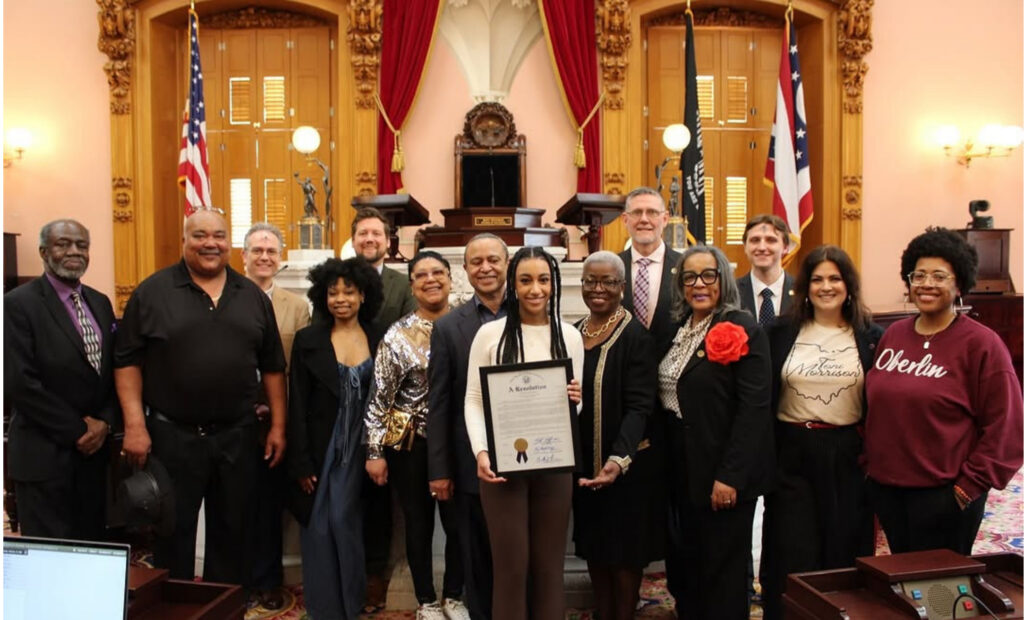
On February 18, 2026, Literary Cleveland and Ohio Humanities launched Beloved: Ohio Celebrates Toni Morrison, a year-long, statewide celebration of her life and legacy. Its goals are to honor a legendary Ohioan, engage communities through literature, strengthen connections across organizations, reflect on American history, and prepare for future national celebrations of her work.
Toni Morrison as a Historical Figure
Toni Morrison died in 2019 at the age of 88. Her relatively recent death is likely one reason we do not yet fully view her as a historical figure. But the subject matter of her work—and her commitment to centering the lives of Black Americans, including the joy, trauma, and contradictions that define human experience—are also part of the reason.
Her refusal to prioritize the comfort of the general public has given her work an undeserved reputation for being difficult—challenging to read, confront, and fully absorb. Morrison told undertold stories, and as a result, she is one too.
As we continue through America 250 and Ohio’s year of celebrating her legacy, cultural organizations across the state are elevating her as central to Ohio’s story. Ohio was the starting point of her global intellectual and artistic life. Claiming Morrison more fully among the Ohioans who shaped American culture is natural, because understanding Morrison is part of understanding America.
Her work documents experiences often excluded from traditional narratives—those deemed too intimate or uncomfortable to confront. But this is exactly why Morrison belongs at the center of our historical conversation. She pushes us to reflect on America’s ongoing pursuit of a more perfect union.
Pride for a Great Ohioan
Morrison’s life and work are essential to understanding America’s past—and preparing the next generation to carry it forward. As Ohioans, let’s claim her with the same pride with which we celebrate the Wright Brothers, John Glenn, Dean Martin, and the many others who changed America but were shaped by Ohio.
Rebecca Asmo is the Executive Director of Ohio Humanities.
Sources:
Sewell, Dana A. Toni at Random: The Iconic Writer’s Legendary Editorship. New York: Random House, 2025.
Widdicombe, Toby. Toni Morrison: A Biography. Santa Barbara, CA: Greenwood Press, 2019.