
Finding Ohio in Unexpected Places: A Summer Journey Through California
Written by Melinda Huntley, executive director of the Ohio Travel Association and an America 250-Ohio Commissioner. Huntley co-chairs the Signature Programming & Events Committee and serves as a lead on the Trails & Tales program, a partnership with the Ohio Travel Association.
Sometimes, Ohio shows up where you least expect it.
Serving as an America 250-Ohio Commissioner has given me the chance to see Ohio’s story from a wider point of view.
As we developed six different America 250-Ohio Trails & Tales driving routes through the state, we have explored the Ohio people, places, ideas, and innovations that have shaped our nation for more than 250 years. This summer, while visiting Los Angeles and Southern California, I came face to face with three examples straight from the Ohio Creativity Trail.
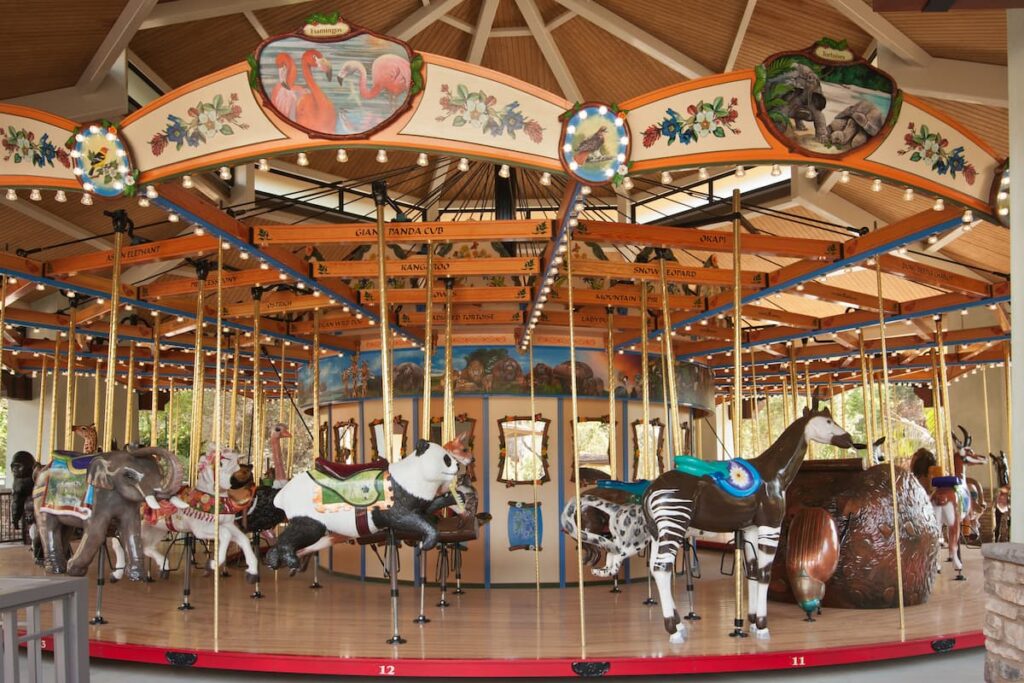
Mansfield’s Carousel Works Spotted at the L.A. Zoo
The first was at the Los Angeles Zoo, where I saw a beautiful carousel made by Carousel Works in Mansfield. Seeing that craftsmanship so far from home reminded me that Ohio creativity really does travel. Something dreamed up and built in Mansfield is now helping families make memories in Los Angeles.
The L.A. Zoo carousel was handcrafted in Mansfield in 2011, during a roughly 30-year period when this Ohio company helped lead a national revival of traditional American carousel carving. The president of the National Carousel Association later described Mansfield as a world hub for the art form because of Carousel Works’ impact.
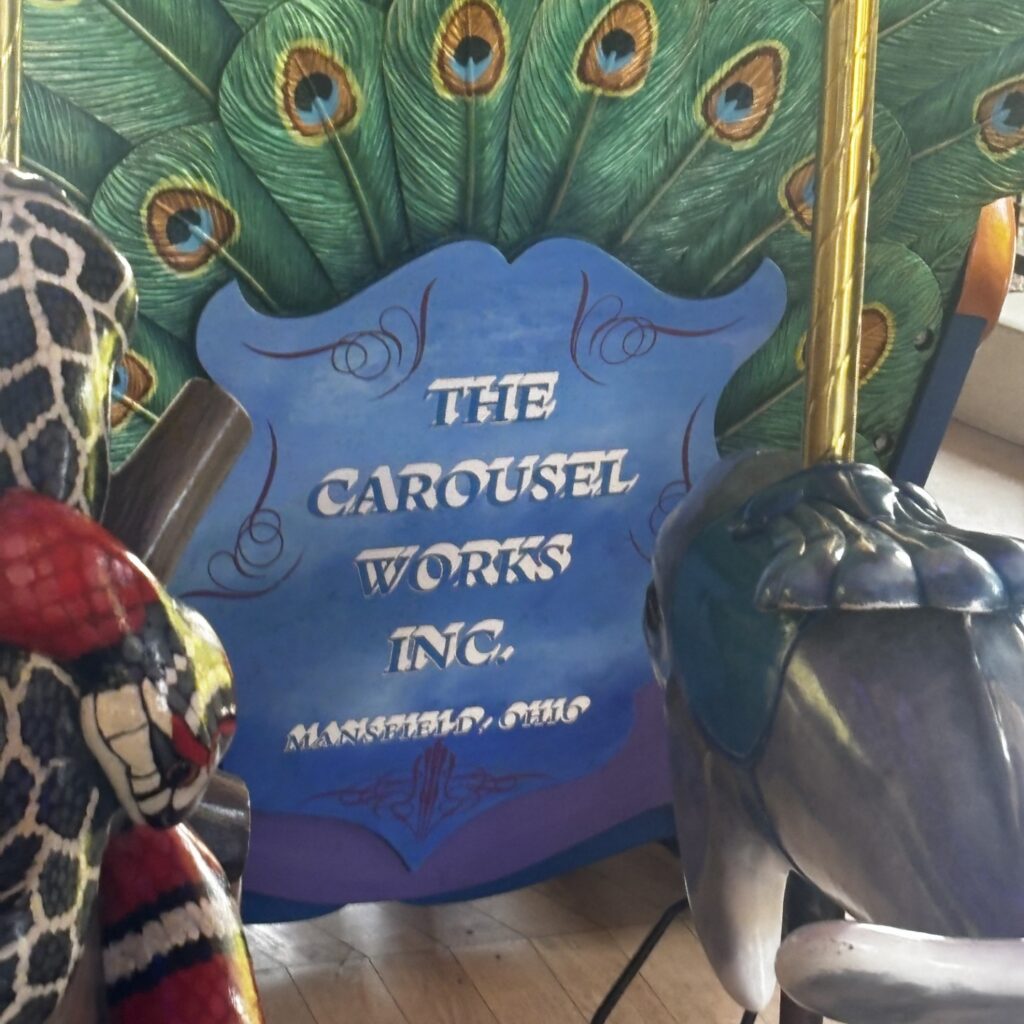
Toledo’s Iconic Libbey Glass Found in Ojai
My second Ohio connection was during a visit to Ojai, California, where that link is woven into the community itself and featured on historic markers.
Edward Drummond Libbey, the glass industrialist closely associated with Libbey Glass and Toledo, first visited the Ojai Valley with his wife, Florence, in 1907. He later became deeply involved in the community, helping transform the town of Nordhoff into the Ojai we know today. Working with architects Frank Mead and Richard Requa, Libbey supported a cohesive Spanish-style village plan that included the Arcade, Pergola, Post Office Tower, a civic park, and other landmarks. His influence also extended to what became the Ojai Valley Inn, the Ojai Library property, and St. Thomas Aquinas Church, now home to the Ojai Valley Museum (where Libbey glass is now prominently displayed).
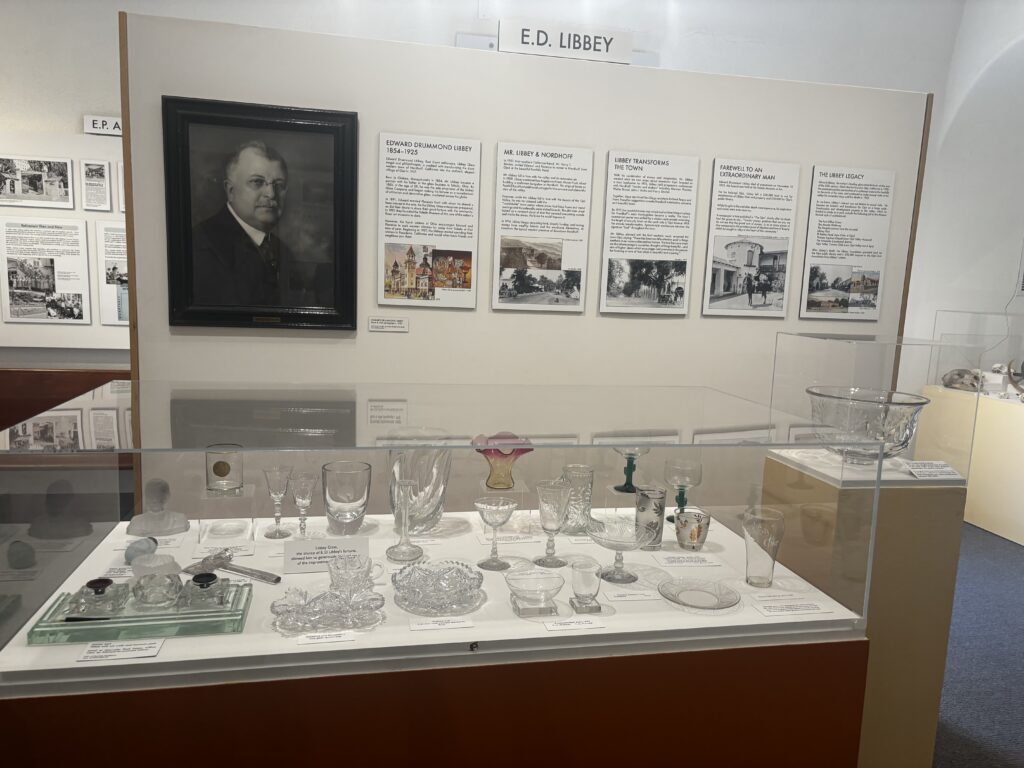
Walking through Ojai made me appreciate just how far an Ohio story can go. Libbey used his success from Toledo to invest in art, architecture, public spaces, and community life in other places. Over a hundred years later, his vision is still part of Ojai’s identity.
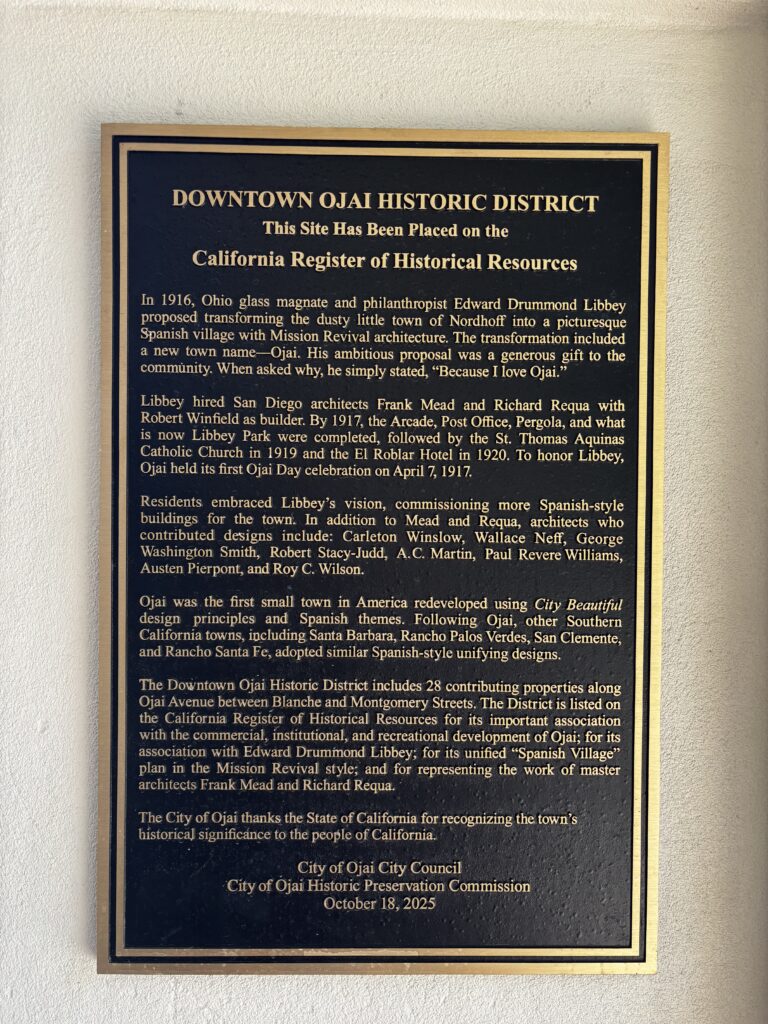
I also noticed one more coincidence: Ojai looks and even sounds a little like Ohio. There is no evidence that Libbey’s Ohio roots shaped the name, which comes from a Chumash word associated with the moon and predates his arrival. Still, for an Ohioan walking through a California community transformed by a Toledo glassmaker, the similarity felt fitting, and I felt at home. So naturally, I bought an Ojai sweatshirt.
Then came my most unexpected Ohio discovery.
Cincinnati’s Rookwood Pottery Displayed at The Huntington
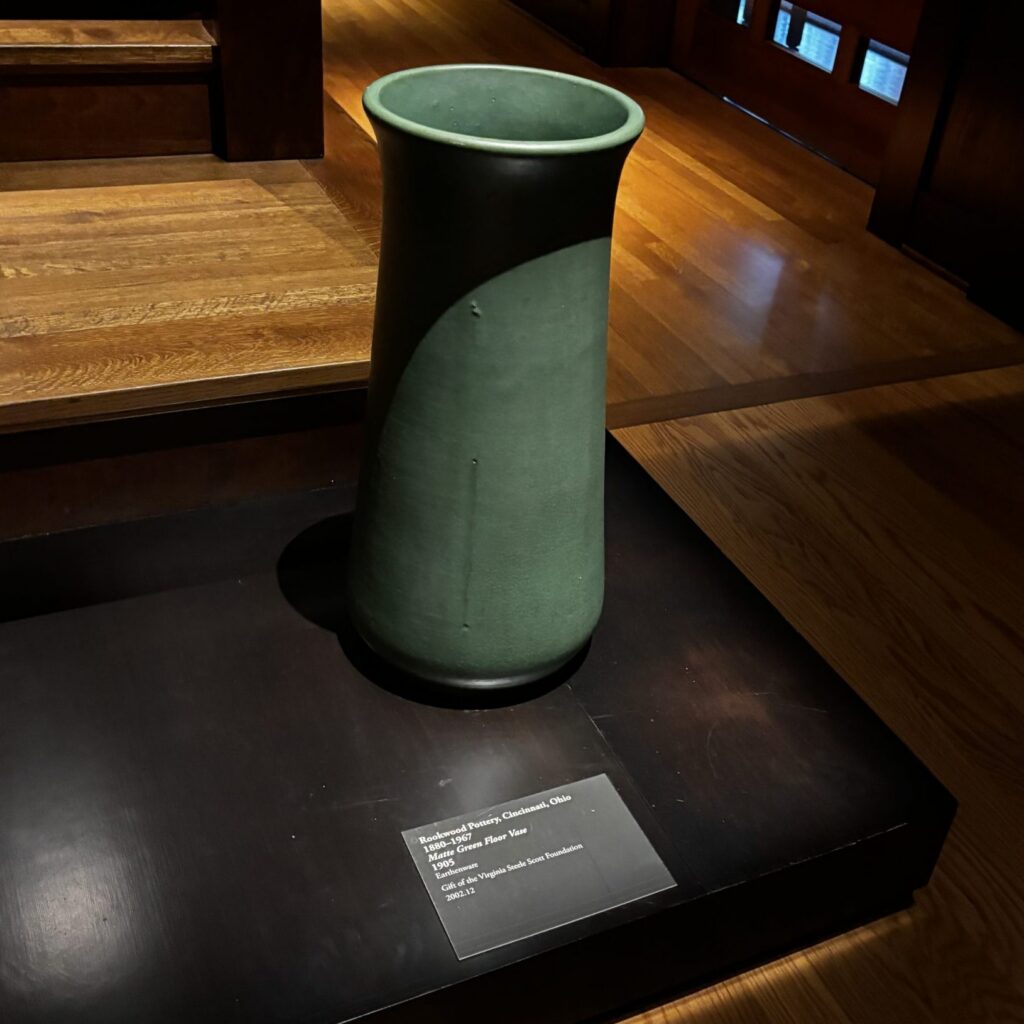
While visiting The Huntington Library, Art Museum, and Botanical Gardens in San Marino, I came across a piece from Cincinnati’s Rookwood Pottery. The 1905 matte green floor vase is part of The Huntington’s American Art collection and is included in its Arts and Crafts collection, associated with architects Charles and Henry Greene, whose work helped define Southern California design in the early 20th century.
That context made the Rookwood piece even more meaningful. It was not simply an Ohio object that had found its way to California; it was Ohio creativity contributing to a broader American design story. Cincinnati’s Rookwood Pottery earned national and international recognition for elevating American ceramics, and its craftsmanship stood alongside the work of leading figures in the American Arts and Crafts movement.
Three places. Three different connections to the trail. One thing in common. Ohio.
These discoveries changed how I think about the Ohio Creativity Trail and the story we are telling through America 250-Ohio. The trail is more than a collection of destinations. It represents something larger: the story of Ohioans who created, built, imagined, experimented, designed, and shared their talents with the world.
That influence is everywhere, as Ohio’s creativity has never stayed in one place.
It has traveled across the country, shaped communities, inspired artists, built industries, and created experiences that generations of Americans continue to enjoy. And the story is far from over, as today’s creators, artists, builders, and makers continue to leave their mark on artistic expression.
Sometimes, a trip across the country reveals just how far Ohio’s story reaches. Fortunately, you do not have to travel that far to discover it, as the Ohio Creativity Trail is ready to help you explore these stories and many more.