
May is Jewish American Heritage Month
In 2006, George W. Bush proclaimed that each May the contributions of Jewish Americans should be recognized and honored.
This May, as part of America 250-Ohio’s Under-Told Stories, we’re highlighting several notable Jewish Americans with Cincinnati ties and sharing the stories that may be largely unknown of their contributions to the world.
Cincinnati Rabbi innovated the square-shaped matzah
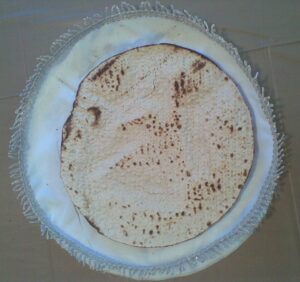
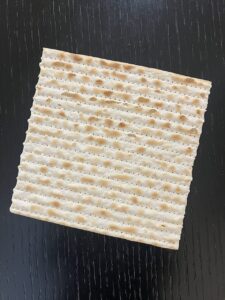
For millennia, matzah, the unleavened bread at the core of Jewish ritual meals, had been made totally by hand in round ovens. In 1888, Rabbi Dov Behr Manischewitz, an immigrant from Lithuania, started a small kosher bakery in Cincinnati’s Price Hill where he automated the baking process and produced square-shaped matzah that was mass-marketed and shipped worldwide. Over time, Manischewitz’s matzah, sometimes called “Cincinnati matzah”, became the largest matzah manufacturer in the world. In his definitive article on the subject, “How Matzah Became Square: Manischewitz and the Development of Machine-Made Matzah in the United States,” Dr. Jonathan Sarna explores not only the industrial innovations that made square machine-made matzo normative, but also reveals how business, politics, philanthropy, ties to Israel, and an ongoing commitment to Jewish law and Jewish life played a role in the remarkable story of Manischewitz matzah.
Breakthroughs in healthcare
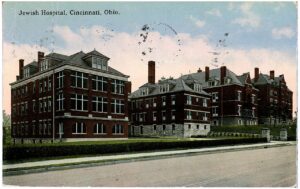
The first Jewish Hospital in the U.S.
By 1849, the Jewish community of Cincinnati had established a Jewish hospital, the first of its kind in the United States. It occupied two buildings at Betts and Cutter Streets in the West End before moving to Third and Baum Streets and eventually to Burnet Avenue and ultimately to Kenwood. Cincinnati’s Jewish Hospital was founded after the city’s cholera outbreak exposed the need for a place to treat indigent Jews, to better serve the health needs of Cincinnati Jewry, and to provide Jewish doctors with an opportunity to become hospital staff physicians.
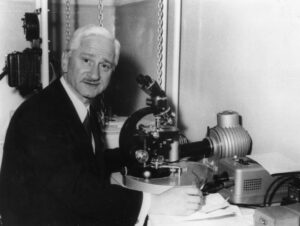
Lifesaving Polio Oral Vaccine developed by Dr. Albert Sabin
One of the world’s greatest medical breakthroughs happened at the University of Cincinnati Children’s Hospital Research Foundation, where Dr. Albert Sabin (1906-1996) a Polish-Jewish immigrant, developed the oral polio vaccine. The war against polio that he began in 1931 ended in 1957 when the vaccine he had developed reached the point of mass administration, thus eliminating the disease in many parts of the world.
Inventors of Two American Pantry Staples
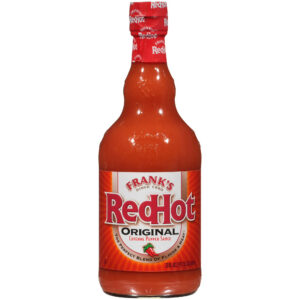
FRANK’S REDHOT SAUCE
Lovers of Frank’s RedHot Original Cayenne Pepper Sauce may not be aware of the Cincinnati origins of this famous condiment. In 1896, Jacob Frank (1867-1941) ended his career as a traveling salesman and went into business with his brothers Charles and Emil, establishing a company selling small, shelf-sized packages of whole and ground spices, rather than in bulk. Frank found a partner in Adam Estilette, who was from a Cajun family, and together they set up a pickling plant in New Iberia, Louisiana, to process and cure cayenne peppers before they were shipped to Cincinnati. Other spices, salts, garlic and vinegar were added to the peppers, which were then aged in oak casks. Frank’s RedHot was bottled in the Queen City, produced by the Frank Tea and Spice Co., and first put on shelves in 1920.
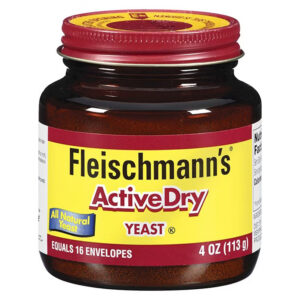
FLEISCHMANN’S YEAST
The familiar brown jar with a red and yellow label represents the story of Fleischman’s Yeast, and how it revolutionized modern American baking. In 1868, Charles and Maximilian Fleischmann left Austria-Hungary to make a better life in America. After settling in Cincinnati, the Fleischmann brothers began their quest to make a better-rising bread like they had known in their homeland. In partnership with American businessman James Gaff, the Fleischmanns built a yeast plant in Cincinnati, where they produced and patented a compressed yeast cake that revolutionized home and commercial baking in the United States. It was America’s first commercially produced yeast, and it soon became the country’s best-selling yeast and a household name.
Building Legacy and Community Understanding
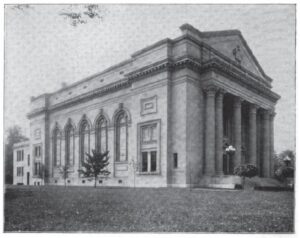
CHESTNUT STREET CEMETERY AND THE FOUNDING OF CINCINNATI’S JEWISH COMMUNITY
Communal Jewish life in Cincinnati began with the establishment of the Chestnut Street Cemetery in the West End at the corner of what is today Central Avenue and Chestnut Street in the year 1821, making it the oldest Jewish cemetery west of the Allegheny Mountains. Joseph Jonas, originally from Great Britain, is believed to be the first Jewish settler in Cincinnati, arriving here in 1817. Jonas helped raise the funds for the first Jewish congregation west of the Alleghenies, K.K. Bene Israel, today’s Rockdale Temple, which had its first building at Sixth and Broadway, erected in 1836. The congregation served German and English immigrants, who represented the first wave of Jewish immigration to America.
NANCY & DAVID WOLF HOLOCAUST & HUMANITY CENTER
The Nancy & David Wolf Holocaust & Humanity Center in Cincinnati is unique as the only Holocaust museum in the United States located at an authentic site of arrival—the historic Union Terminal, where survivors first arrived to rebuild their lives. Founded by local survivors, it features personalized, local narratives, interactive holographic testimony, and a focus on becoming an “upstander”. The Center exists to ensure the lessons of the Holocaust inspire action today. By educating about the Holocaust, remembering its victims and acting on its lessons. Through innovative programs and partnerships, the Center challenges injustice, inhumanity, and prejudice, and fosters understanding, inclusion, and engaged citizenship. The Center impacts more than 2.5 million people every year through digital and in-person events, museum tours, educational experiences, social media, and virtual content. From Australia to India, individuals from more than 25 countries and 30 states engage with its mission.
History of Jewish American Heritage Month
Every year, by Presidential Proclamation, May is Jewish American Heritage Month (JAHM), celebrated in recognition of the indelible contributions American Jews have made, and continue to make, to our nation’s history, culture, and society. This national celebration shows the ways in which this history deserves our collective attention, pride, and recognition. The stories of American Jewish life are quintessential American stories of resilience, aspiration, imagination, determination, and achievement. Each May, hundreds of organizations and Americans of all backgrounds join together to discover, explore, and celebrate the vibrant and varied American Jewish experience from the dawn of our nation to the present day.
Photo credits:
Matzah: By HaJunkiyada – Own work, CC BY-SA 4.0, https://commons.wikimedia.org/w/index.php?curid=181390613
Hand-baked shmurah matza.jpg By Debresser – Own work, CC BY 3.0, https://commons.wikimedia.org/w/index.php?curid=14972698
Cincinnati Jewish Hospital By This file was contributed to Wikimedia Commons by Columbus Metropolitan Library as part of a cooperation project. The donation was facilitated by the Digital Public Library of America, via its partner Ohio Digital Network.Record in source catalogDPLA identifier: c508c3077e3621d9d4d0036346890f8fColumbus Metropolitan Library identifier: Cincinnati00180, Public Domain, https://commons.wikimedia.org/w/index.php?curid=134841782
Dr. Albert Sabin By Not stated – Orsini D, Martini M. Photo Quiz. Emerg Infect Dis. 2022;28(3):743-746. https://doi.org/10.3201/eid2803.204699, Public Domain, https://commons.wikimedia.org/w/index.php?curid=116127605
K.K. Bene Israel By Unknown author – October issue of the 1912 volume of Ohio Architect Engineer and Builder, page 20 in the original and page 311 in its Google Books PDF, Public Domain, https://commons.wikimedia.org/w/index.php?curid=9105519